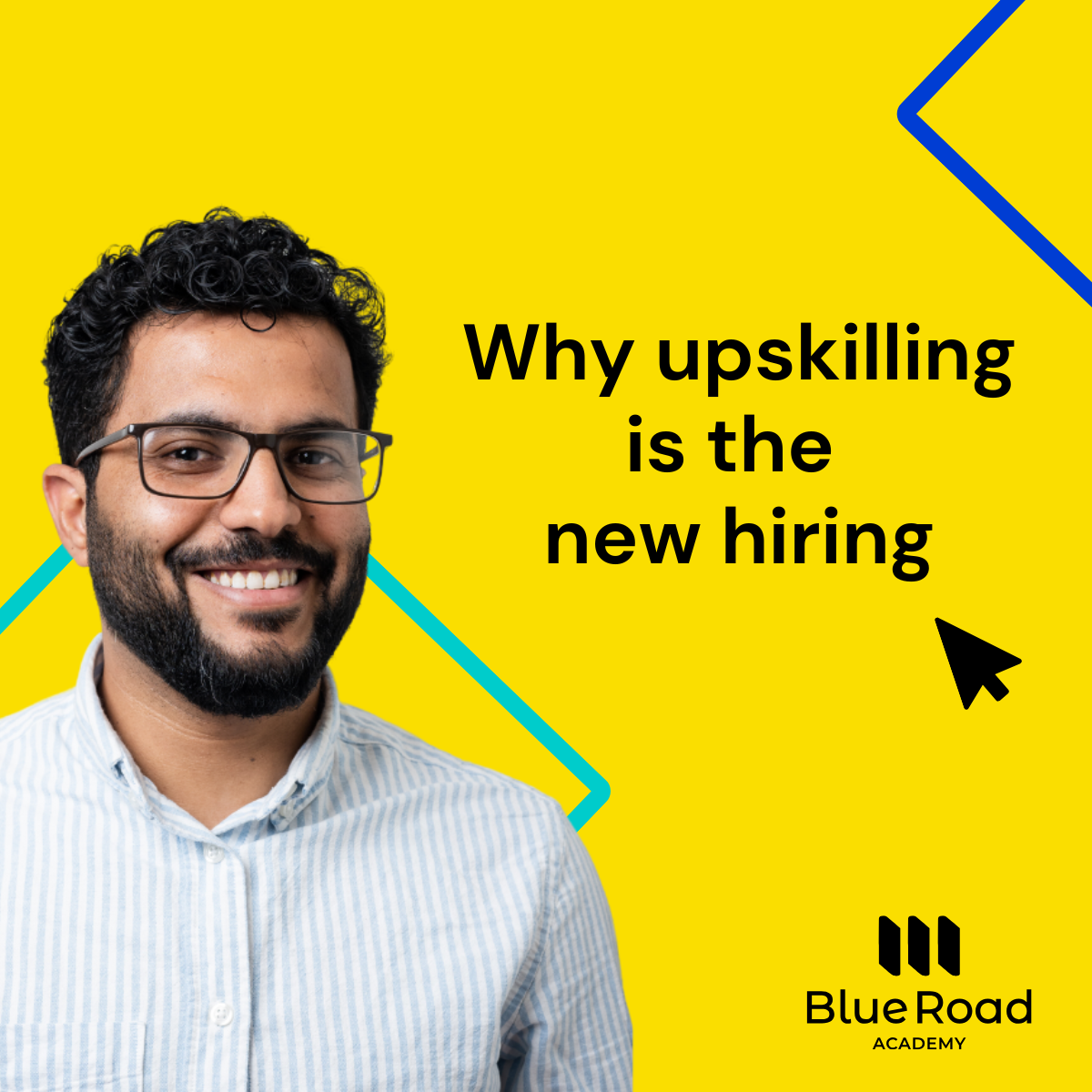
White Paper: Why Skill Gaps Persist and What Leading L&D Managers Are Doing Differently.
Discover why skills gaps persist and learn 5 proven strategies leading L&D managers use to drive business impact through upskilling.
The skills gap isn’t getting smaller.
But the solution may not be what most companies think.
Too many organizations respond to AI and cloud transformation by hiring externally or bringing in consultants. Meanwhile, their existing workforce is left behind.
Our latest White Paper explores why skill gaps persist — despite billions spent on training — and what leading L&D managers are doing differently to create real business impact.
Despite massive investments in hiring, training, and digital transformation, skill gaps continue to grow across industries.
Why?
Because most organizations are still approaching workforce development reactively instead of strategically.
As AI and cloud technologies evolve faster than teams can adapt, many companies respond by hiring externally or relying heavily on consultants. While this may solve short-term problems, it rarely builds long-term capability inside the business.
The result:
- Rising hiring costs
- Slower productivity
- Increased dependency on external expertise
- Teams that struggle to keep pace with change
The companies making real progress are taking a different approach. In our latest white paper, we explore the 5 strategies leading L&D managers are using to upskill their workforce and drive measurable business impact.
The 5 Strategies Leading L&D Managers Use
1. Treat L&D Like a Product, Not a Service
Top-performing L&D teams focus on business capability gaps, not just training requests. They build measurable learning roadmaps tied directly to organizational goals.
2. Speak the Language of Business Impact
Leading L&D managers frame learning as a business solution, not a cost center. The conversation shifts from “training budgets” to “performance outcomes.”
3. Align Learning with the Tech Stack
The best organizations build learning strategies around future infrastructure and technology goals, ensuring teams evolve alongside the business.
4. Build Peer-Driven Learning Systems
Some of the most effective learning happens between colleagues. Successful organizations identify internal mentors and create scalable peer-support systems.
5. Measure Velocity, Not Just Completion Rates
Completion metrics alone don’t tell the full story. Leading teams track business impact through productivity gains, reduced consultant reliance, and faster project execution. The organizations that succeed in the AI era won’t simply hire more talent. They’ll build adaptable, future-ready teams from within.
Want to dive deeper into these strategies and learn how leading organizations are solving workforce transformation challenges?
👇👇 Download the full white paper below 👇👇